Installing a diesel air heater in my workshop
I built my workshop in the top floor of my garage about 4 years ago. I like to make small scale toys and automata there.
To extend my 'making season' into the colder months I decided to install a Sunster 8KW TB10 Toolbox Diesel Air Heater a few weeks ago. That was a quick trial to check that the heater unit worked as expected, the heating duct was effective, and that the exhaust pipework was safe.
This weekend I did the final fit, and I'm very pleased with the final result. The heater can take the temperature from 4 degrees Celsius up to 14 degrees in about 20 minutes, and has a thermostat to hold it at that temperature throughout the day.
I usually set it between 10 and 12 degrees as I'm quite active when in the workshop and don't need it to be super-warm.
Another big improvement is the reduced humidity in the workshop - my tools will thanks me for that :)
Rough plan of my workspace
Although there's a lot of available floor space, a large proportion is currently occupied by general household stuff (which I'll remove in the coming months).
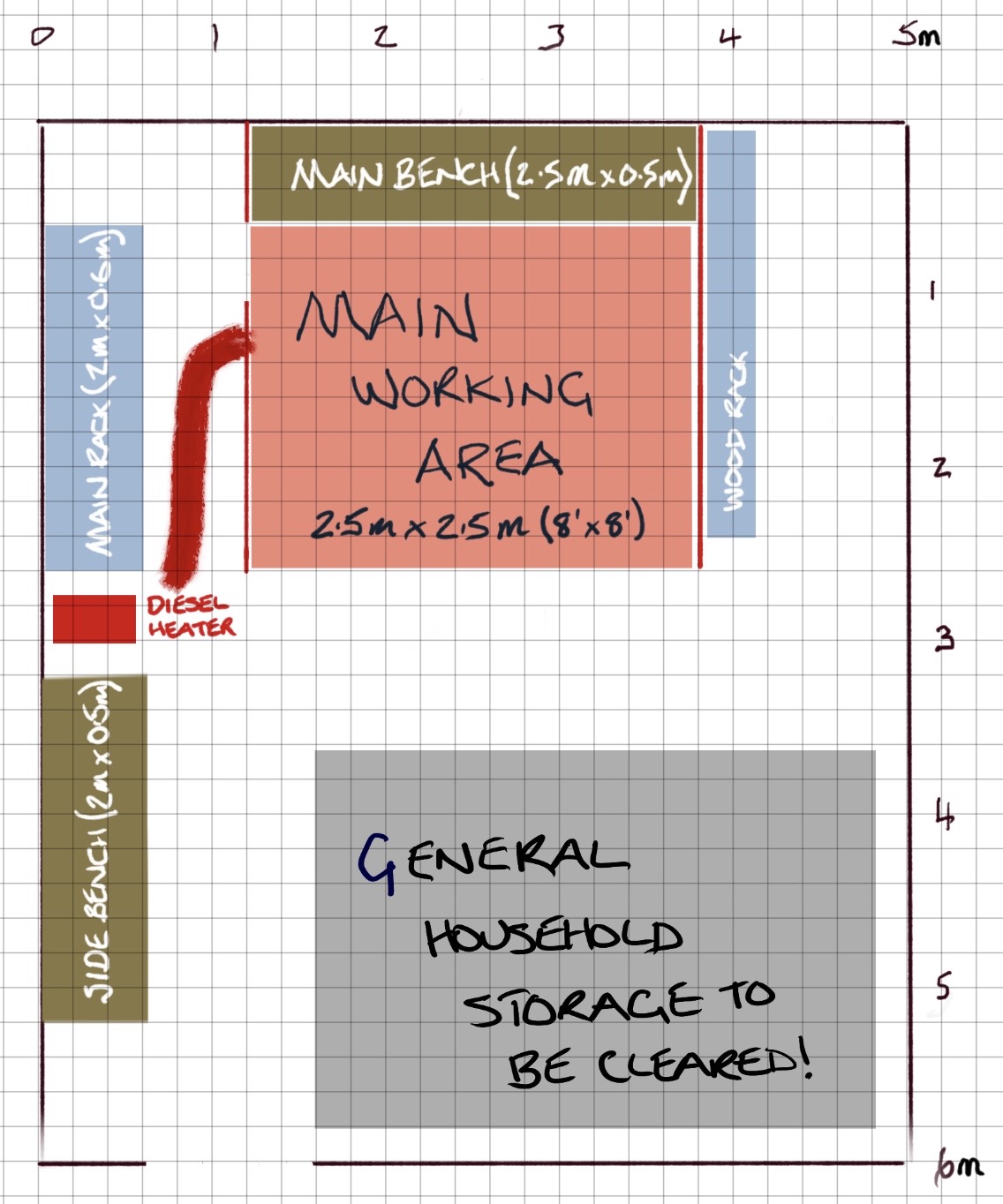
My main working area is an 'inner room' that I made after my first winter in the workshop as a means to reducing the volume of air that needed to be heated when I was working. It certainly helped in that respect, but the old electric heater I used was definitely not up to the job.
Another reason for the inner room is my preference for small workshops. They force me to tidy up as I go, instead of leaving tools and materials strewn around throughout the day, and they're easier to keep clean.
The small red box on the left of the plan shows where the diesel heater is installed, and how the heating duct is routed into the inner room.
Final result
Here are a few photos of my super-toasty workshop. It's so nice to be working in the warmth when there's a sleet storm blowing outside, like today :)
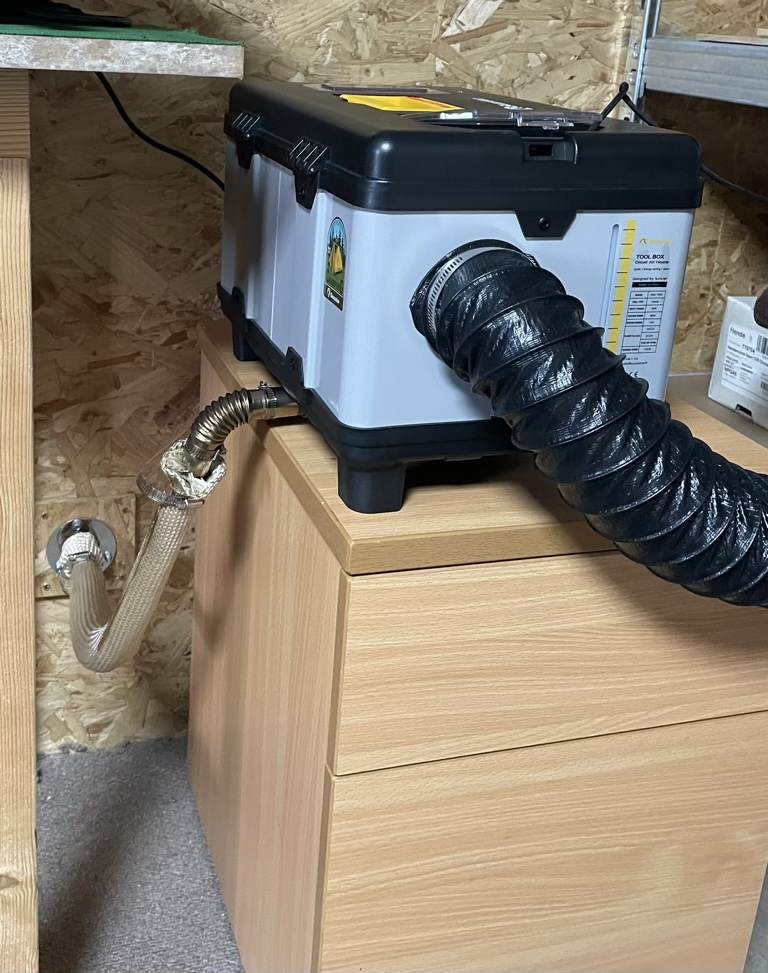
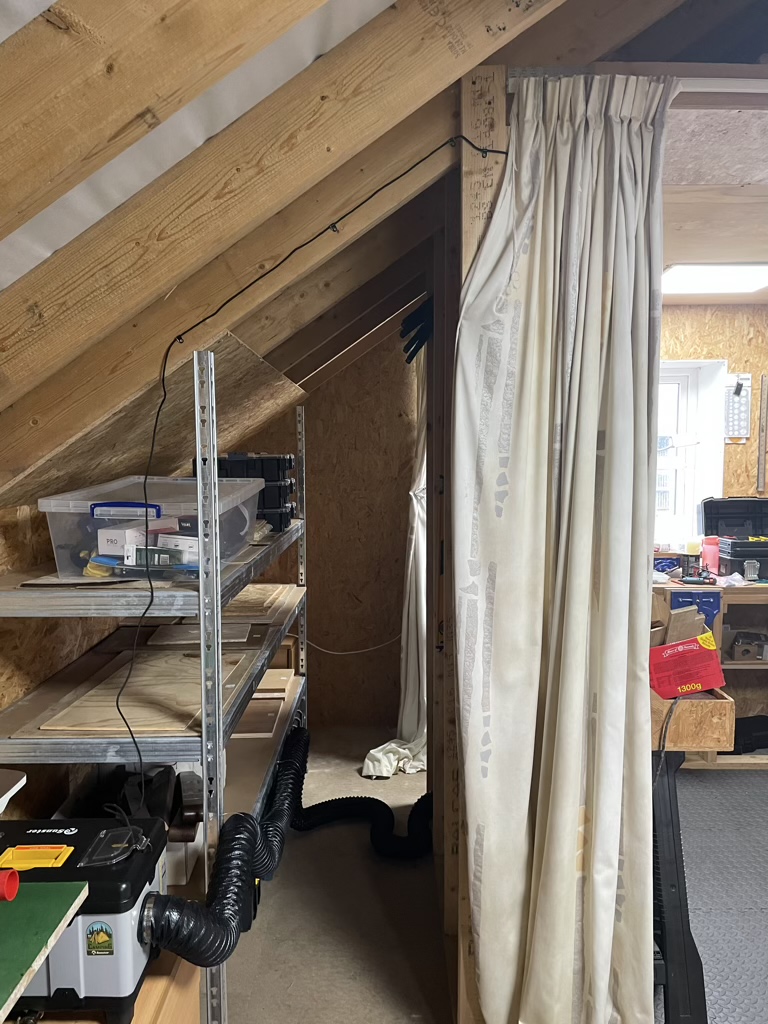
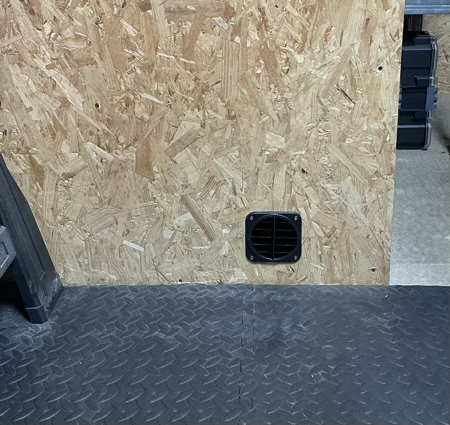
(Not shown, there's a carbon monoxide monitor mounted at head height above my main workbench just in case there's a leak from the exhaust piping).
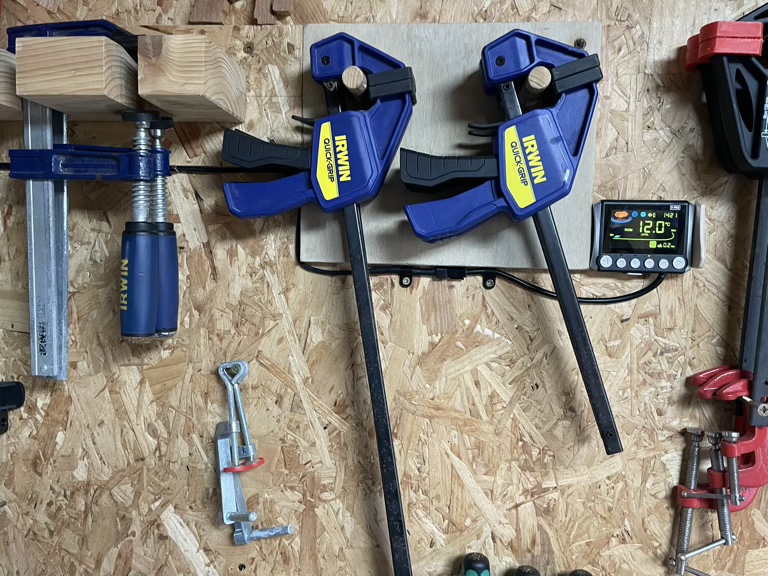
The supplied remote control is super-handy. The screen is used to start and stop the heater, set the thermostat etc. It also came with a battery-powered Bluetooth controller fob for basic start and stop operations.
Next steps
Now that the heating is sorted I'm going to reorganise my workshop, ready for making some interesting projects in the coming weeks and months.